This fact sheet helps you to know what’s ‘normal’ and what you can expect to happen if your child develops an ear infection (otitis media). It also tells you when you should become concerned and seek medical advice from a health professional, or if you need urgent medical attention.
Useful facts
What is middle ear infection?
Behind the ear drum is a small space that’s filled with air: the middle ear. When germs (such as viruses or bacteria) enter, for example during a cold, an infection can develop. Middle ear infection is also known as “acute otitis media”.
How dangerous is it?
In most children, it is a harmless infection that gets better by itself within 3-7 days without any complications.
How common is it?
Middle ear infection is very common, mostly affecting children. More than half of all children suffer at least one middle ear infection by the time they’re 7. Symptoms usually last 3 days but can last up to 7. Most children and young people get better within 3 days without the need for antibiotics.
Who’s affected?
Middle ear infections are more common in children who breathe in tobacco smoke, attend day care (nursery,) or who drink formula milk rather than breast milk.
What are the symptoms?
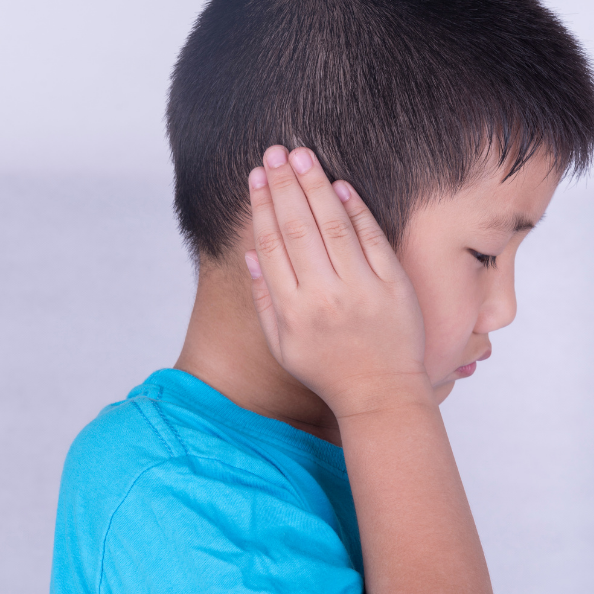
Older children usually complain of ear ache, while younger children often pull or rub their ears. It is common to get a fever, but not usually above 38°C. Other common symptoms in small children include being irritable, crying, disturbed sleep, cough, snuffly nose and poor feeding.
Does my child need antibiotics?
Most children with a mild middle ear infection will not benefit from antibiotics. Antibiotics may be prescribed if your child is very unwell (eg high fever and/or vomiting), if they are considered at risk of complications, if they develop a leaking ear, or, in children younger than 2 years, have infections in both ears. Your child may be prescribed ‘back up’ antibiotics, to be started only if they do not improve or become more unwell.
What can I expect to happen?
Symptoms: Symptoms of middle ear infection tend to develop quickly and usually last 3 days, but can last 7 days. Most children and young people get better within 3 days without the need for antibiotics.
Fluid leaking from the ear: A hole may form in the ear drum and cause infected thick fluid (pus) to run out of the ear. This usually relieves the pain as it reduces the pressure on the ear drum.
Treatment for ear infection in children
Giving painkillers: You can give either Paracetamol or Ibuprofen if your child is unwell or appears distressed. Do not give both at the same time unless advised by a health professional. You can try the alternative medicine if your child does not respond to the first one you start with. Always follow the manufacturer’s instructions. Do not give Aspirin to children under the age of 16. Don’t give antihistamines or decongestants.
What can I do to help my child get better now and in the future?
Wipe away discharge: Wipe any discharge away but do not put anything in the ear, including cotton buds and fingers.
Keep your child cool: Avoid over or underdressing a feverish child. Keep your central heating down. Tepid sponging is not recommended.
Fluids: Offer your child regular fluids. If you’re breastfeeding, offer as many feeds as your child will take. Avoid dummies and feeding while lying flat.
Body checks: Check your child at night regularly for signs of serious illness.
Use a warm or cold flannel: A warm or cold flannel applied to the ear can help.
When should I seek medical attention?
Most ear infections are not serious and get better by themselves. Contact your child’s surgery or ring 111 in England and Wales, the Phone First service in Northern Ireland or NHS24 in Scotland if your child has one or more of the following symptoms:
High fever: A body temperature over 39°C in older children, particularly if aged between 3-6 months of age
Vomiting
Not improving: Your child becomes generally unwell or doesn’t start to improve after 3 days.
Fluid: If fluid leaks out of the ear.
Existing conditions: If your child has a long-term medical condition such as diabetes or a weakened immune system, for example due to chemotherapy.
Regular ear infections: contact your surgery if your child has regular infections or if any hearing loss does not improve after an infection.
Swelling: You notice any swelling around the ear.
Hearing loss: If there are any signs of diminished hearing after infection has cleared.
- SEEK URGENT ADVICE if your child shows any of these symptoms: being more sleepy than usual, confusion, feeling dizzy, a stiff neck, a rash, slurred speech, seizures (fits), being sensitive to light or is aged 0-3months and has a temperature of 38°C or more.
Where can I find out more?
A member of your pharmacy team can help you in assessing and treating your child’s symptoms, otherwise you can visit an NHS website.
In England, as part of the NHS Pharmacy First Service participating community pharmacies offer ear examinations and appropriate advice.
NHS England Website:
NHS Inform, Scotland:
NI Direct, Northern Ireland:
NHS111, Wales:
We review our health information every two years and this information is due to be updated in October 2026.